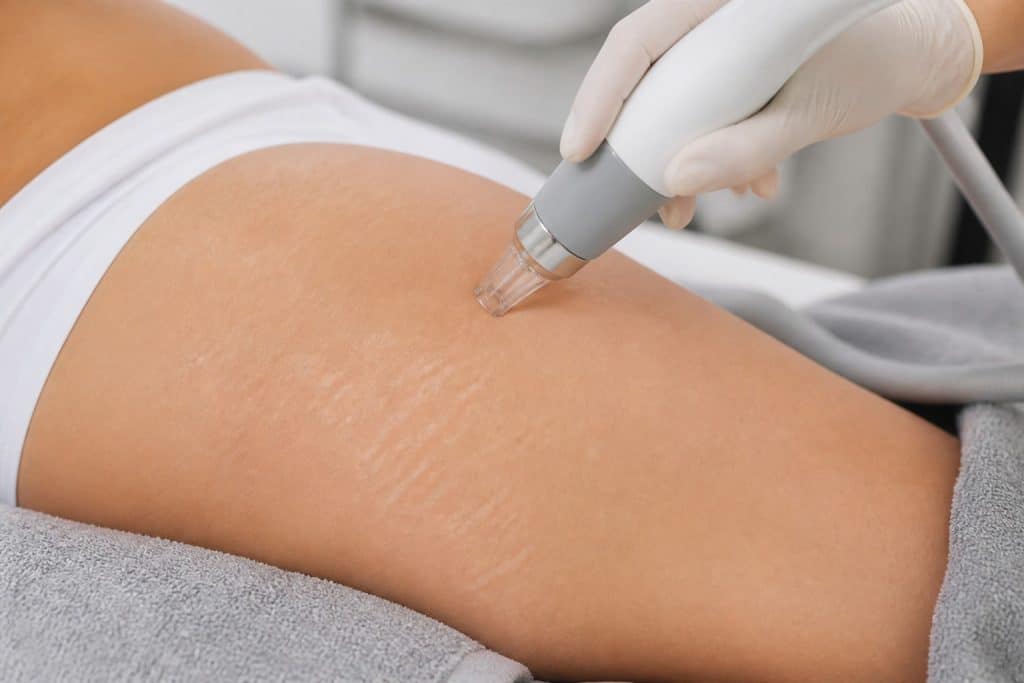
Laser stretch mark removal can make stretch marks less noticeable, but it cannot erase them completely. Most people need several sessions, some downtime and realistic expectations about the final result.
If you live in the Beaches or elsewhere in Toronto's east end, the useful questions are practical ones. Which laser fits your skin tone, how many visits will it take, what will it cost, and when is the right time to start? This guide covers each of those in order.
Can stretch marks be removed with a laser?
Lasers can improve the look of stretch marks, but they cannot remove them entirely. The American Academy of Dermatology states that laser treatment cannot fully remove stretch marks. It can make them less noticeable, and multiple sessions are often needed.
Stretch marks are scars in the dermis, the layer of skin beneath the surface. They form when skin stretches faster than it can adapt, which is common during pregnancy, growth spurts, weight changes and muscle gain. The Cleveland Clinic’s overview of stretch marks explains how they develop and notes that skin can continue to improve after treatment.
A good outcome is a mark that is flatter, smoother and closer in color to the surrounding skin. A perfect outcome is not a realistic promise from any clinic.
Do lasers really work for stretch marks?
Lasers do work for many people, with results that vary by the age of the marks, skin tone and the type of laser used. Newer, redder marks usually respond better than older, white ones.
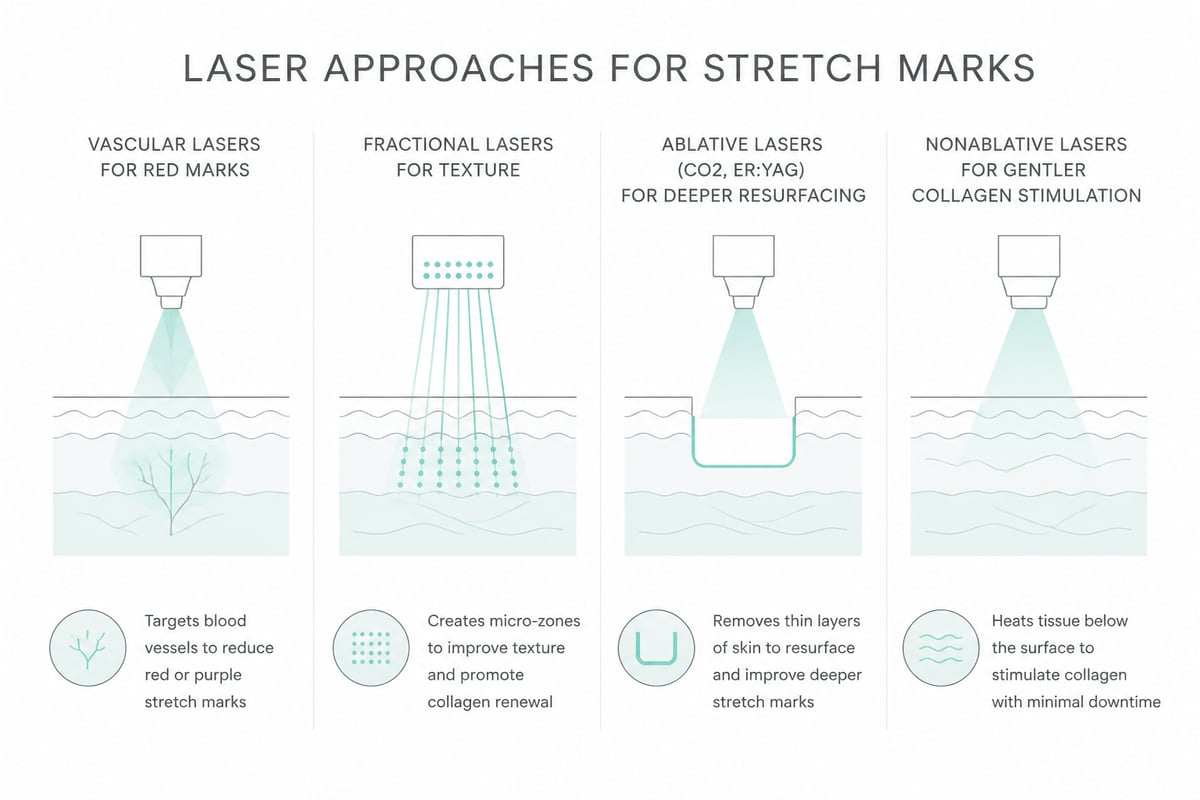
Different lasers target different problems:
- Vascular and pulsed dye lasers focus on the red or purple color of newer stretch marks.
- Fractional lasers create tiny controlled channels in the skin to prompt new collagen and improve texture.
- Ablative lasers, such as fractional CO₂ and Er:YAG, remove thin layers of skin and are more intensive.
- Nonablative lasers heat the deeper skin without removing the surface, so recovery is gentler.
Results build gradually. Collagen remodeling takes weeks, which is why improvement is judged months after a session, not days.
How does laser stretch mark treatment work?
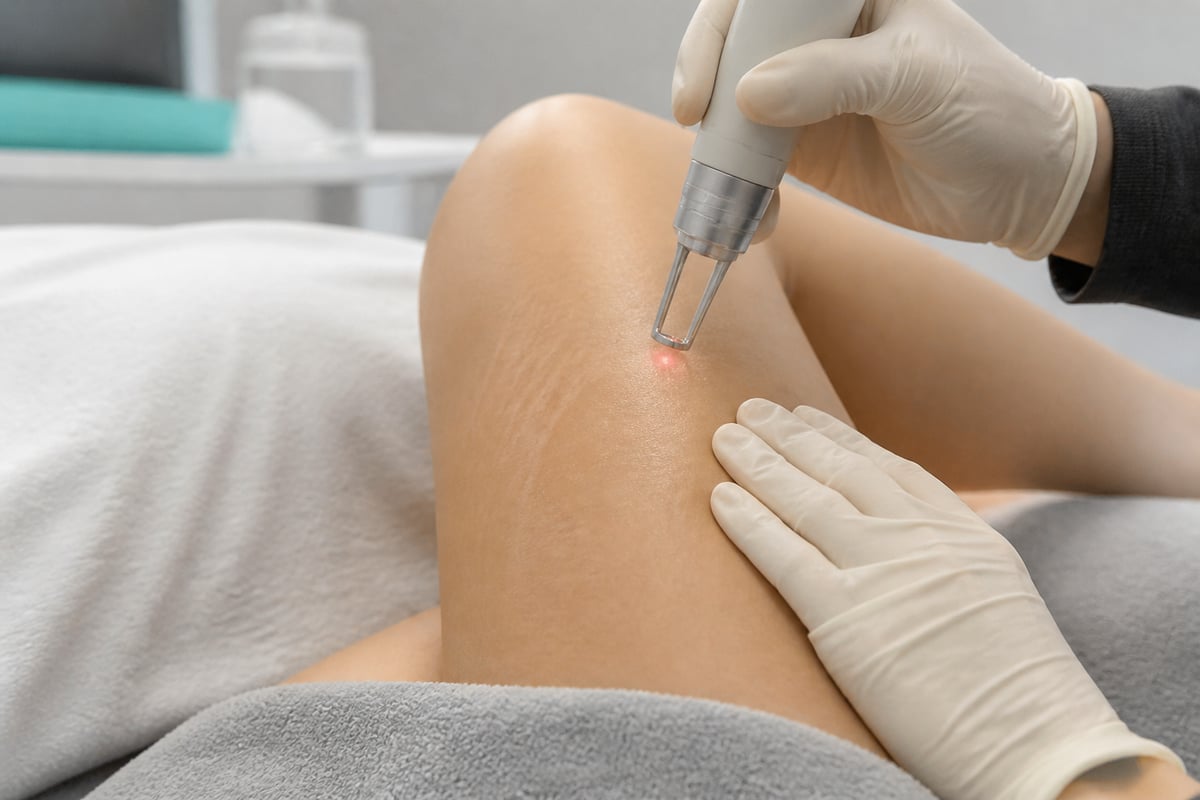
A laser delivers controlled light energy into the skin, which triggers the body's repair response and stimulates new collagen and elastin. Over the following weeks, the scarred tissue gradually remodels and the mark becomes smoother and less visible.
A typical session follows a set pattern:
- The skin is cleansed and, where appropriate, a numbing cream is applied.
- Eye protection is provided and the laser handpiece is passed over the treatment area.
- Cooling is used to keep the skin comfortable during the pulses.
- A soothing product and sun protection guidance are provided afterward.
Sessions on a single area such as the abdomen or thighs often take under an hour, though this depends on the size of the area and the device. Many people describe the sensation as a warm snap, similar to a rubber band against the skin. Intensity varies with the laser and the settings chosen.
When is the best time to treat stretch marks?
The best time to treat stretch marks is while they are still red or purple, because younger marks tend to respond more readily. Older white or silvery marks can still improve, but results are usually more modest.
Timing matters in other ways too:
- After pregnancy: Dermatologists commonly suggest waiting until you have finished breastfeeding and your weight has stabilized, then discussing options.
- After weight change: Treating when your weight is steady helps keep results from being undone by further stretching.
- Before a tan: The American Academy of Dermatology warns that a tan or sunburn can make laser treatment unsafe, since it may cause a serious burn or discoloration. This matters for Toronto residents who spend summer weekends on the Beaches boardwalk or at Woodbine Beach.
Many people in Toronto choose to start in the fall or winter, when sun exposure is lower and treated skin is easier to protect while it heals.
How many laser sessions will you need?
Most people need several sessions, depending on the laser type and how established the marks are. A 2026 review of stretch mark treatment across skin types describes typical ranges of 3 to 5 sessions for fractional CO₂ lasers, 2 to 4 for Er:YAG lasers and 3 to 6 for nonablative lasers.
Sessions are usually spaced several weeks apart so the skin can heal and rebuild collagen between visits. A full course can therefore run several months, and final results continue to develop after the last appointment.
Your own number depends on:
- The age, depth and width of your marks
- Your skin tone and how it responds to heat
- The area being treated, since abdomen, hips, thighs and breasts can respond differently
- The device and settings your provider selects
A clear plan at the start prevents surprises. Ask for the expected number of sessions, the spacing between them and what improvement is realistic for your marks.
Is laser treatment safe for darker skin tones?
Laser treatment can be safe for darker skin tones, but device choice and settings matter more. The 2026 review noted above reports a higher risk of post-inflammatory hyperpigmentation with ablative lasers, particularly in darker skin.
Post-inflammatory hyperpigmentation is a darkening of the skin that can follow irritation or injury. To lower the risk, providers often use gentler nonablative approaches, conservative energy levels and a test area before treating larger zones.
Skin tone assessment should happen before any treatment. This is one reason an in-person consultation matters: the right laser for one person can be the wrong one for another.
What are the risks and side effects?
Most side effects are temporary and mild, though complications are possible. Common reactions include redness, swelling, warmth, tenderness and a sandpaper-like or flaky texture as the skin heals.
Less common risks include:
- Darkening or lightening of the treated skin
- Blistering or crusting, more likely with ablative lasers
- Infection, which is uncommon with proper aftercare
- Scarring, which is rare when settings are correct and instructions are followed
You can reduce risk by avoiding sun exposure before and after treatment, disclosing any medications or skin conditions, and following aftercare exactly. People with a history of keloid scarring, active skin infections or certain photosensitizing medications may need to avoid treatment or adjust the plan.
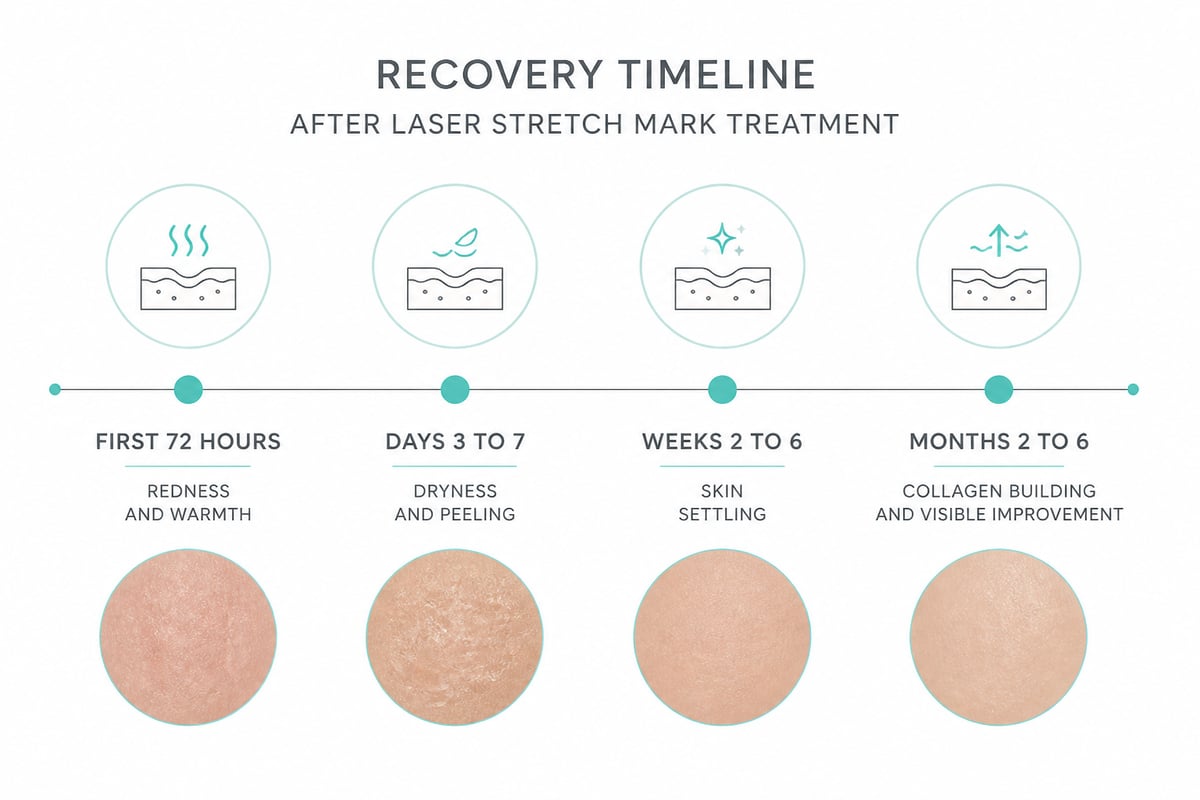
What does recovery look like?
Recovery from laser stretch mark removal ranges from a day or two of redness with gentler lasers to about a week of visible healing with stronger ones. Your provider will tell you what to expect for the specific device used.
A general timeline looks like this:
- First 24 to 72 hours: Redness, mild swelling and a warm, sunburn-like feeling.
- Days 3 to 7: Dryness, peeling or flaking as the surface renews.
- Weeks 2 to 6: Skin settles, and early texture and color changes begin to show.
- Months 2 to 6: Collagen continues to build, and the best results usually appear.
Aftercare is simple but important. Keep the area moisturized, avoid picking or scrubbing, skip hot tubs and intense workouts for the period your provider recommends, and apply a broad-spectrum sunscreen daily. Sun protection is needed while treated skin heals, as the American Academy of Dermatology notes.
How much does laser stretch mark removal cost?
Laser stretch mark removal is priced per session and varies widely with the size of the area, the laser used and how many visits you need. Because stretch marks are a cosmetic concern, treatment is generally not covered by provincial health insurance.
For a general benchmark, a 2025 CareCredit article reports a national average cost range of $1,212 to $4,203 for laser scar removal. That figure covers scar treatment broadly, not stretch marks specifically, so treat it as a rough reference and not a quote for Toronto.
What drives your total cost:
- Treatment area: A small patch costs less than an abdomen, hips and thighs together.
- Number of sessions: A course of several visits multiplies the per-session price.
- Type of laser: More intensive devices and specialized technology can change pricing.
- Follow-up care: Skincare and sun protection products add to the overall budget.
The most reliable way to get a real number is a consultation where your skin is assessed and a plan is written out. At New Skin Laser Clinic, treatment plans and exact pricing are confirmed before anything is done, so there are no surprises after you begin.
Are there alternatives to laser treatment?
Yes, other options exist, and some people combine them with laser for better results. The right choice depends on the age of your marks, your budget and how much downtime you can accept.
- Topical retinoids: Prescription creams may help newer marks but are not suitable during pregnancy or breastfeeding.
- Microneedling: Tiny needles prompt collagen production and may suit people who want a non-laser route.
- Radiofrequency treatments: These heat deeper tissue to encourage skin tightening and remodeling.
- Chemical peels and microdermabrasion: These mainly affect the surface and offer modest improvement.
- Moisturizers and oils: They support skin comfort but have limited evidence for removing existing marks.
The American Academy of Dermatology offers an overview of scar and stretch mark treatments and what to consider before pursuing cosmetic care. A consultation can help you weigh these options against laser for your specific marks.
How should you prepare for your first appointment?
Preparing well helps your skin respond safely and gives you a clearer picture of what to expect. A few steps in the weeks before your visit make a real difference.
- Avoid tanning and sunburn. Stay out of the sun and tanning beds, and use sunscreen on the area to be treated.
- List your medications and supplements. Some, including certain acne and antibiotic medications, increase light sensitivity.
- Note your skin history. Mention keloid scarring, cold sores, eczema or recent skin procedures.
- Photograph the area. A clear baseline helps you judge progress honestly.
- Write down your goals and budget. Know what improvement you want and how many months you can commit.
Arrive with skin that is clean and free of lotion, and wear loose clothing that gives easy access to the treatment area.
What should you look for in a Toronto laser clinic?
Choose a clinic that assesses your skin in person, explains the plan clearly and confirms pricing in writing before treatment begins. Skill, equipment and transparency matter more than a discounted package.
Useful questions to ask any provider:
- Which laser will be used for my skin tone, and why?
- How many sessions do you expect, and at what spacing?
- What is the total cost, and what is included?
- What are the risks, and how are complications handled?
- What aftercare do you recommend?
New Skin Laser Clinic is located at 1834 Queen St East in the Beaches and offers a free consultation before any treatment, with no pressure or obligation. Three Google reviews praise the clinic's service, cleanliness and professional staff. For stretch mark concerns specifically, book a consultation so the team can review your skin and explain which options are suitable and what they would cost.
FAQ
What did Kim Kardashian use to get rid of stretch marks?
Celebrity stories are not a reliable guide to your own results. What works depends on your skin tone, the age of your marks and the device used, so a personal assessment is a better starting point.
Will stretch marks come back after laser treatment?
Treated marks do not usually return to their original appearance, but new stretch marks can form if your skin stretches again through pregnancy, weight gain or rapid muscle growth. Keeping your weight stable after treatment helps protect your results.
Does laser stretch mark treatment hurt?
Most people describe a warm, snapping sensation that is tolerable, and a numbing cream or cooling can improve comfort. The level of discomfort depends on the laser, the settings and the area treated, so ask your provider what to expect.
Your next step is to book a consultation so someone can look at your marks, confirm the plan and give you exact pricing before you commit to anything. New Skin Laser Clinic at 1834 Queen St East in the Beaches offers advanced laser treatments and personalized skin care from a team of expert estheticians. To book your free consultation, call (416) 317-6696 or use the link to reserve a time that suits you.