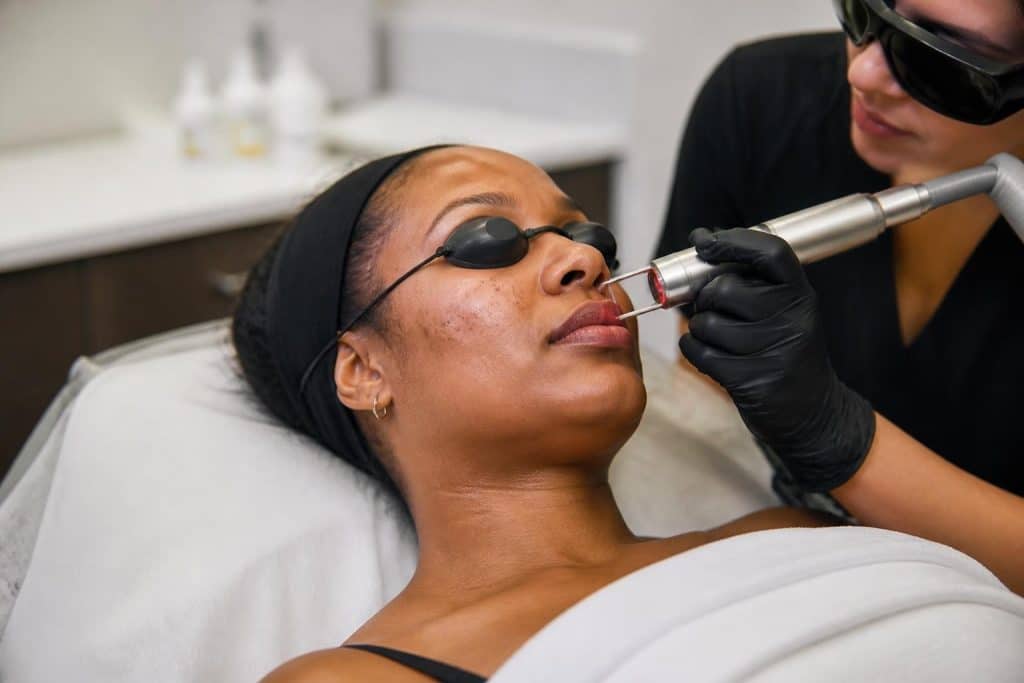
Dark spots, age spots, and hyperpigmentation can affect anyone regardless of age or skin type. These stubborn patches of discoloration often resist topical treatments, leaving many searching for more effective solutions. Face dark spot laser treatment has emerged as one of the most powerful tools available for reducing unwanted pigmentation, offering targeted results that creams and serums simply cannot match. Understanding how these treatments work, what results you can expect, and how to choose the right approach for your skin type can make the difference between disappointing outcomes and the clear, even complexion you desire.
Understanding Dark Spots and Hyperpigmentation
Dark spots develop when melanin production becomes irregular in specific areas of the skin. This overproduction creates visible patches that range from light brown to nearly black, depending on your natural skin tone and the underlying cause.
Common Types of Facial Pigmentation
Several distinct types of hyperpigmentation affect the face, each with unique characteristics and treatment considerations:
- Melasma: Hormone-triggered patches typically appearing on cheeks, forehead, and upper lip
- Post-inflammatory hyperpigmentation (PIH): Dark marks left behind after acne, injury, or inflammation
- Solar lentigines: Age spots or sun spots caused by cumulative UV exposure
- Freckles: Genetic tendency toward clustered pigmentation that darkens with sun exposure
The American Academy of Dermatology provides comprehensive guidance on understanding and fading dark spots, emphasizing that proper diagnosis is essential before beginning any treatment protocol.
Why Traditional Treatments Fall Short
Topical treatments containing hydroquinone, kojic acid, or vitamin C work by inhibiting melanin production at the surface level. While these products can produce gradual improvement, they often require months of consistent use and may not penetrate deeply enough to address established pigmentation.
Face dark spot laser treatment offers a different mechanism entirely. Rather than slowly suppressing melanin production, laser energy targets existing pigment deposits directly, breaking them apart so your body can naturally eliminate them.
How Laser Technology Targets Pigmentation
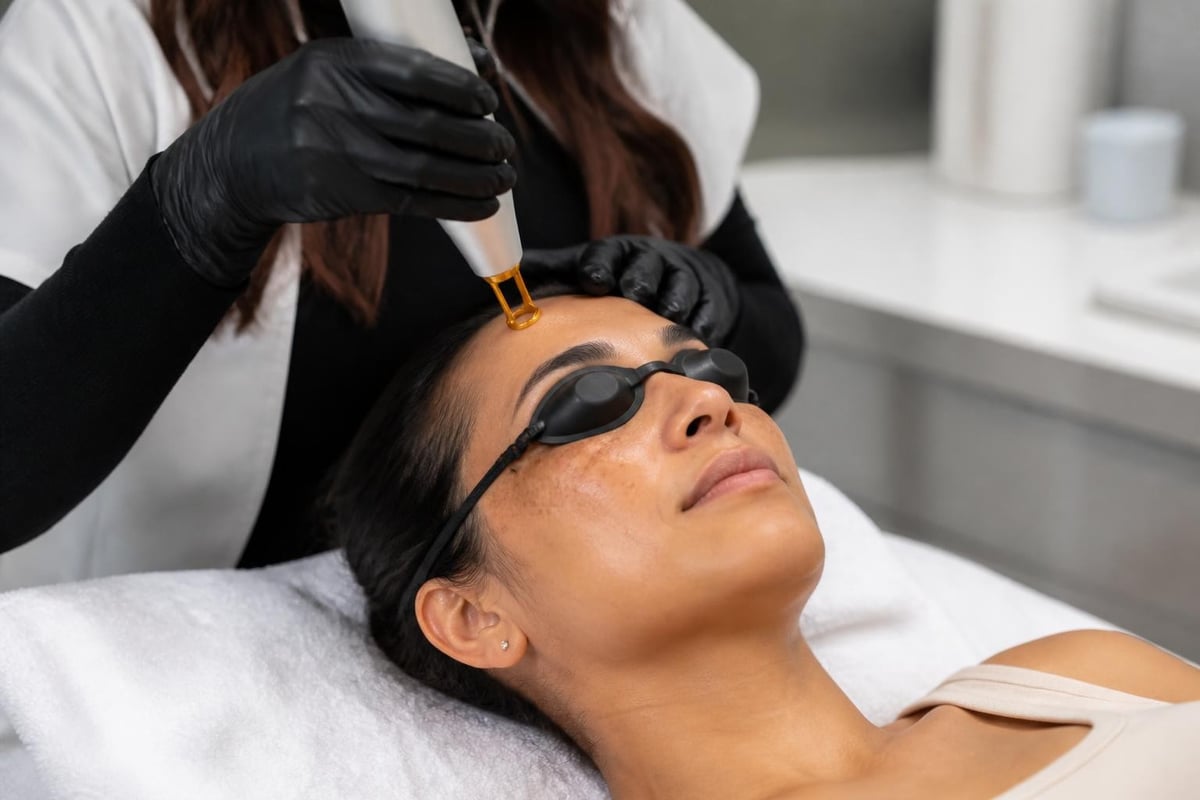
Laser treatments work on the principle of selective photothermolysis, which means the laser energy is absorbed preferentially by specific targets in the skin while leaving surrounding tissue unharmed.
The Science Behind Laser Pigment Removal
When laser light contacts your skin, darker pigments absorb more energy than lighter surrounding tissue. This absorption causes the melanin to heat rapidly, fragmenting the pigment into smaller particles that your lymphatic system can process and remove.
Different wavelengths of laser light penetrate to different depths and are absorbed by different targets:
| Laser Type | Wavelength | Primary Target | Best For |
|---|---|---|---|
| Q-Switched Nd:YAG | 1064 nm / 532 nm | Deep and surface melanin | Darker skin tones, deep pigmentation |
| Alexandrite | 755 nm | Melanin | Lighter skin, superficial spots |
| Picosecond lasers | Various | Melanin (ultra-fast pulses) | Stubborn pigmentation, minimal damage |
| Fractional lasers | Various | Water and melanin | Overall tone, textured skin |
Research published in medical literature has examined laser and light-based therapies for treating melasma, comparing effectiveness across different device types and patient populations.
Treatment Precision and Customization
Modern face dark spot laser treatment systems allow practitioners to adjust multiple parameters including pulse duration, energy level, spot size, and cooling mechanisms. This customization ensures that each treatment matches your specific skin type, pigmentation depth, and tolerance level.
Key adjustable parameters include:
- Energy fluence (how much energy is delivered)
- Pulse width (how long the laser fires)
- Cooling method (protecting the epidermis)
- Spot size (targeting precision)
The Treatment Experience: What to Expect
Understanding the treatment process helps you prepare mentally and physically for your laser sessions.
Initial Consultation and Skin Assessment
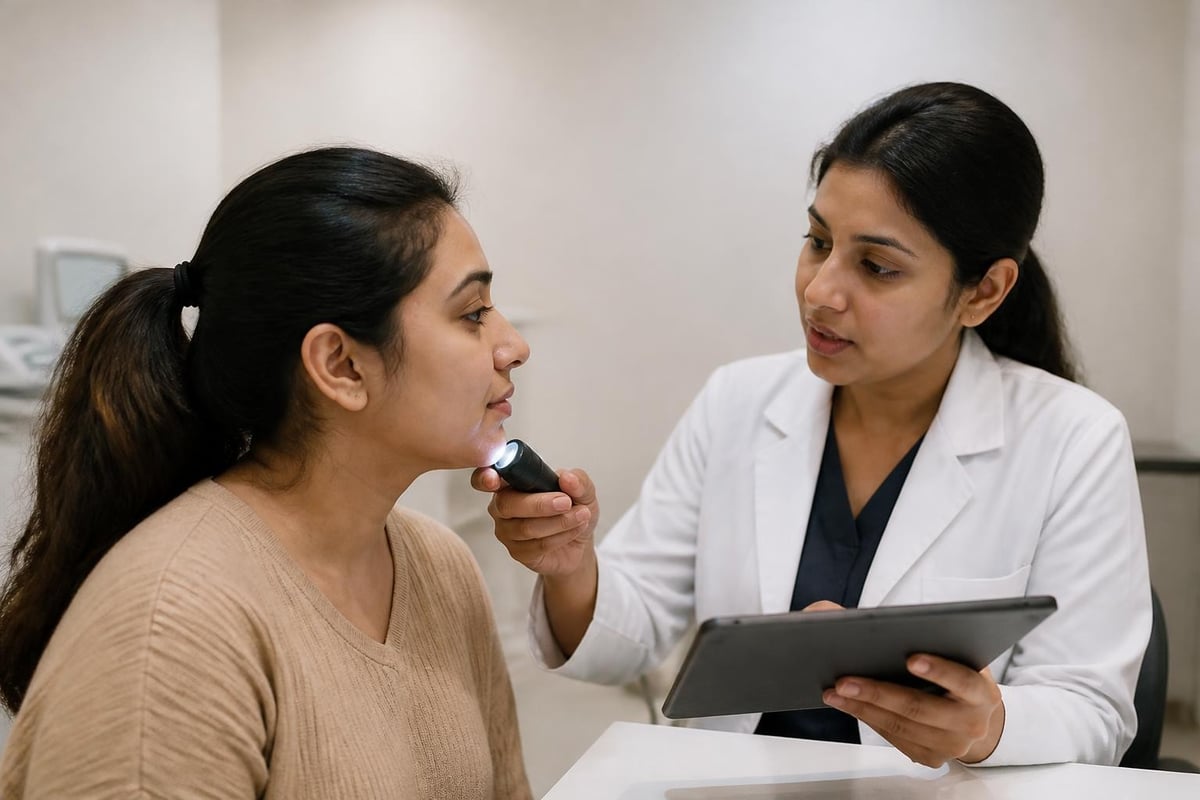
Your first visit involves a detailed skin analysis where the practitioner examines your pigmentation using specialized lighting and possibly imaging technology. This assessment determines pigment depth, distribution, and which laser system will produce optimal results.
During consultation, expect discussion about:
- Your medical history and any medications that increase photosensitivity
- Previous treatments you've tried and their results
- Your skin type according to the Fitzpatrick scale
- Realistic expectations for improvement and timeline
- Pre-treatment preparation requirements
During the Procedure
Face dark spot laser treatment typically takes 15 to 45 minutes depending on the area being treated. Most patients describe the sensation as similar to a rubber band snapping against the skin, though pain tolerance varies significantly.
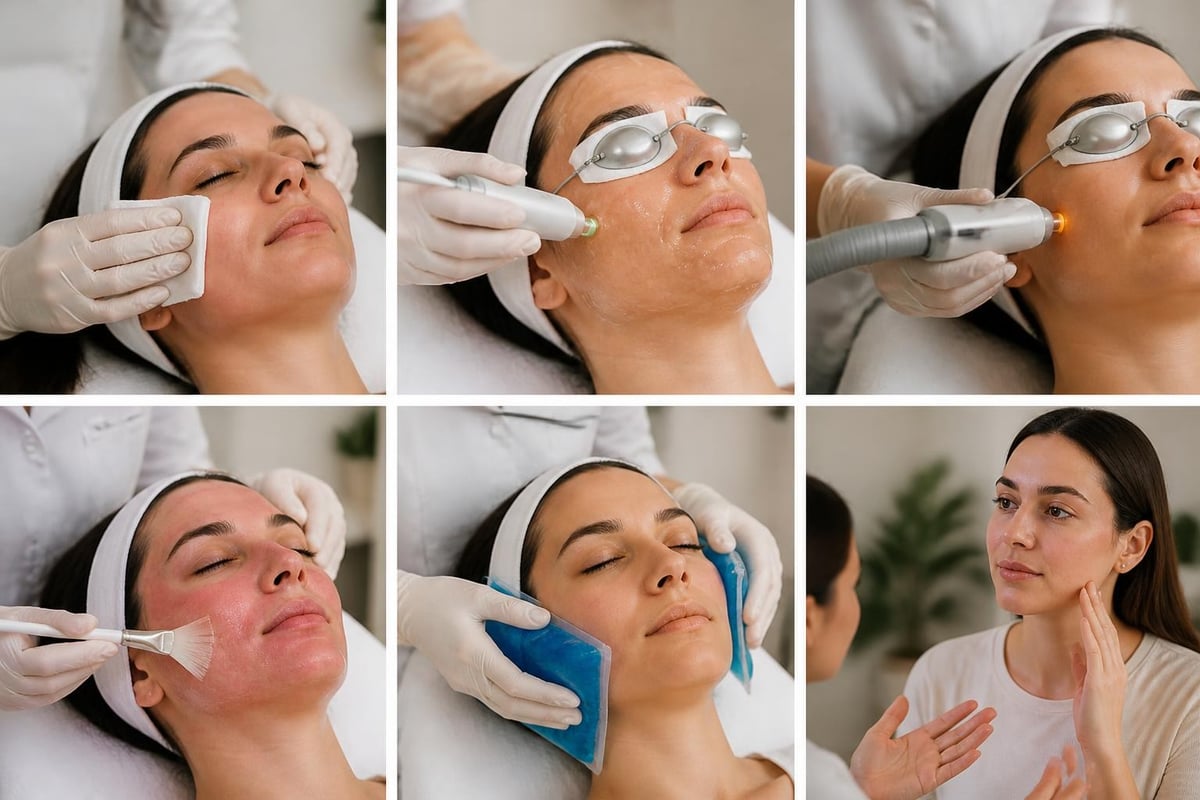
The treatment follows this general sequence:
- Skin is thoroughly cleansed and photographed for before/after comparison
- Protective eyewear is applied to shield your eyes from laser light
- A topical numbing cream may be applied if using aggressive settings
- The laser is passed over treatment areas in a systematic pattern
- Cooling gel or ice packs are applied to reduce immediate inflammation
Some patients experience mild discomfort during treatment, while others find it quite tolerable. The intensity depends on the laser type, your pain threshold, and the aggressiveness of the treatment settings.
Recovery and Results Timeline
Post-treatment care significantly impacts both your comfort and final results. Understanding what happens after your session helps you plan accordingly.
Immediate Aftermath
Immediately following face dark spot laser treatment, treated areas typically appear red and may feel sunburned. Depending on the laser type and settings used, you might notice:
- Darkening of treated spots (before they lighten)
- Mild swelling, especially around delicate areas like eyes
- Sensation of warmth or tightness
- Pinpoint bleeding with more aggressive treatments
These reactions are normal and generally resolve within 24 to 72 hours. Some laser types, particularly Q-switched lasers, cause treated pigmentation to appear darker initially as the fragmented melanin rises to the surface before flaking off.
The Healing Process
Your skin needs specific care during the healing phase to optimize results and minimize complications:
Essential post-treatment care:
- Apply gentle, fragrance-free moisturizer multiple times daily
- Use mineral-based SPF 50+ sunscreen religiously
- Avoid picking at any crusting or flaking
- Skip makeup for 24 to 48 hours
- Avoid hot showers, saunas, and strenuous exercise for several days
- Stay away from exfoliating products and retinoids temporarily
Research on post-inflammatory hyperpigmentation treatment emphasizes that proper post-procedure care is crucial, as laser treatments themselves can trigger new pigmentation if the skin is not adequately protected during healing.
When Results Become Visible
Most patients notice initial improvement within two to four weeks as the fragmented pigment is naturally eliminated. However, optimal results typically require multiple sessions spaced four to six weeks apart.
| Timeline | What to Expect |
|---|---|
| Days 1-3 | Redness, potential darkening of spots |
| Days 4-7 | Flaking, peeling of treated areas |
| Weeks 2-4 | Gradual lightening becomes visible |
| Weeks 6-8 | Second treatment typically scheduled |
| Months 3-6 | Maximum improvement after full series |
The total number of sessions varies based on pigmentation severity, depth, and your individual response. Most patients require between three and six treatments for substantial improvement.
Safety Considerations and Risk Management
While face dark spot laser treatment is generally safe when performed by qualified professionals, understanding potential risks helps you make informed decisions.
Skin Type and Laser Selection
One of the most critical factors in safe laser treatment is matching the laser type to your skin tone. The Fitzpatrick scale classifies skin from Type I (very fair) to Type VI (very dark), and certain lasers work better for specific types.
Skin type considerations:
- Fair skin (Types I-II): Can tolerate most laser types with lower risk of PIH
- Medium skin (Types III-IV): Requires careful selection and conservative settings
- Dark skin (Types V-VI): Needs specific lasers like Nd:YAG to minimize PIH risk
The NHS guidance on laser treatment for pigmented marks provides valuable information about safety protocols and what patients should expect from reputable providers.
Potential Side Effects and Complications
Most side effects are temporary and resolve without intervention, but being aware of possibilities helps you recognize when to contact your provider:
Common, temporary effects:
- Redness and swelling (resolves in 1-3 days)
- Crusting or scabbing (heals in 5-10 days)
- Temporary darkening before lightening
- Mild itching during healing
Rare but serious complications:
- Post-inflammatory hyperpigmentation (new dark spots)
- Hypopigmentation (permanent lightening)
- Scarring (extremely rare with proper technique)
- Infection (if post-care instructions aren't followed)
Contraindications and Precautions
Certain conditions make face dark spot laser treatment inadvisable or require special precautions:
- Active skin infections or open wounds in treatment area
- History of keloid scarring
- Recent isotretinoin use (typically wait 6-12 months)
- Pregnancy or breastfeeding
- Photosensitizing medications
- Recent sun exposure or tanning
Always disclose your complete medical history and current medications during consultation to ensure safe treatment.
Comparing Treatment Options and Technologies
The landscape of laser technology continues to evolve, with newer systems offering advantages in specific situations.
Traditional vs. Advanced Laser Systems
Q-switched lasers have been the gold standard for pigment removal for decades, delivering nanosecond pulses that effectively break apart melanin. Newer picosecond lasers deliver even shorter pulses (trillionths of a second), theoretically offering more efficient pigment fragmentation with less heat damage.
A systematic review and meta-analysis of laser therapy for melasma examined efficacy data across various laser types, finding that while multiple technologies can produce improvement, individual response varies and recurrence rates remain a challenge.
Combination Approaches
Many practitioners now advocate for combination treatments that address pigmentation through multiple mechanisms:
- Laser treatment plus topical brightening agents
- Sequential use of different laser wavelengths
- Laser combined with chemical peels
- Maintenance protocols to prevent recurrence
This multi-modal approach often produces superior results compared to laser treatment alone, particularly for stubborn conditions like melasma.
Cost Considerations
Face dark spot laser treatment represents a significant investment, with pricing varying based on technology used, treatment area size, and geographic location.
Typical pricing structure:
- Per session: $200 to $800
- Full treatment series (3-6 sessions): $1,000 to $4,000
- Maintenance treatments: $200 to $500 annually
While cost is certainly a consideration, choosing a provider based solely on price can lead to disappointing results or complications. Expertise, technology quality, and proper assessment are worth the investment.
Optimizing Long-Term Results
Achieving clear skin is only half the battle; maintaining your results requires ongoing commitment to skin health.
Sun Protection: The Critical Factor
UV exposure is the primary trigger for most pigmentation issues. Without rigorous sun protection, new dark spots will inevitably form and treated areas may darken again.
Comprehensive sun protection strategy:
- Apply broad-spectrum SPF 50+ every morning, regardless of weather
- Reapply every two hours when outdoors
- Wear wide-brimmed hats and UV-protective clothing
- Seek shade during peak UV hours (10 AM to 4 PM)
- Use UV-protective window film in cars and offices
Consider sun protection a permanent lifestyle change rather than a temporary post-treatment requirement.
Supporting Skin Health
Beyond sun protection, several practices help maintain the even tone achieved through face dark spot laser treatment:
- Gentle skincare routine: Avoid harsh scrubs that can trigger inflammation
- Antioxidant serums: Vitamin C, E, and ferulic acid help prevent new pigmentation
- Regular professional treatments: Periodic maintenance sessions can prevent recurrence
- Stress management: Hormonal fluctuations from stress can trigger melasma
- Consistent moisturization: Healthy skin barrier function prevents inflammation
Knowing When to Retreat
Even with excellent maintenance, some pigmentation may return over time, particularly melasma which has hormonal components. Schedule annual skin assessments to catch early recurrence when it's easiest to treat.
Signs you may benefit from maintenance treatment:
- Faint spots becoming more visible
- New pigmentation appearing in previously treated areas
- Uneven tone developing despite good skincare
- Changes after hormonal events (pregnancy, menopause, medication changes)
Choosing the Right Provider
The skill and experience of your practitioner significantly impacts both safety and results from face dark spot laser treatment.
Essential Qualifications to Verify
Look for providers with specific credentials and experience in laser treatments:
- Medical oversight by dermatologists or plastic surgeons
- Certified laser technicians with extensive training
- Experience treating your specific skin type and concern
- Before-and-after portfolio demonstrating consistent results
- Modern, well-maintained laser equipment
Questions to Ask During Consultation
A thorough consultation should address all your concerns and provide detailed information:
Important questions to ask:
- Which specific laser will be used and why is it appropriate for my skin?
- How many treatments will I likely need?
- What is your experience treating patients with my skin type?
- What are the specific risks for my skin tone?
- What happens if I develop complications?
- What is your refund or revision policy?
Pay attention not just to the answers but to how they're delivered. A good provider takes time to educate you and sets realistic expectations rather than making guarantees.
Red Flags to Watch For
Certain warning signs should make you reconsider a provider:
- Guaranteeing specific results or claiming "zero risk"
- Rushing through consultation without thorough assessment
- Reluctance to discuss potential complications
- Significantly lower prices than competitors
- Lack of proper licensing or credentials
- Unwillingness to provide references or before/after photos
Trust your instincts. If something feels wrong or rushed, seek a second opinion before proceeding.
Integration with Overall Skin Rejuvenation
Face dark spot laser treatment often serves as one component of a comprehensive approach to skin health and appearance.
Addressing Multiple Concerns Simultaneously
Many patients seeking pigmentation correction also have concerns about texture, fine lines, or overall skin quality. Modern laser technology can often address multiple issues:
- Fractional lasers improve both pigmentation and texture
- Combination treatments target different chromophores (color targets)
- Sequential procedures address layered skin concerns
- Maintenance plans preserve multiple improvements
Discussing your complete aesthetic goals during consultation allows your provider to develop an integrated treatment plan that addresses all your priorities efficiently.
Professional Care at New Skin Laser Clinic
Expert guidance makes all the difference in achieving safe, effective results with advanced treatments. New Skin Laser Clinic combines cutting-edge technology with personalized assessment to create treatment plans tailored to each client's unique skin type and goals.
Benefits of professional laser treatment:
- Customized settings based on individual assessment
- Medical-grade equipment maintained to highest standards
- Expert recognition of contraindications and risk factors
- Comprehensive pre- and post-treatment guidance
- Access to combination therapies for enhanced results
Face dark spot laser treatment offers a powerful solution for stubborn pigmentation that resists traditional approaches, delivering visible results when performed with appropriate technology and expertise. Understanding the process, realistic expectations, and the importance of proper aftercare sets you up for success. New Skin Laser Clinic in Toronto provides expert aesthetic treatments using state-of-the-art laser technology, with experienced estheticians who create personalized treatment plans designed to reveal your most radiant, even-toned complexion.