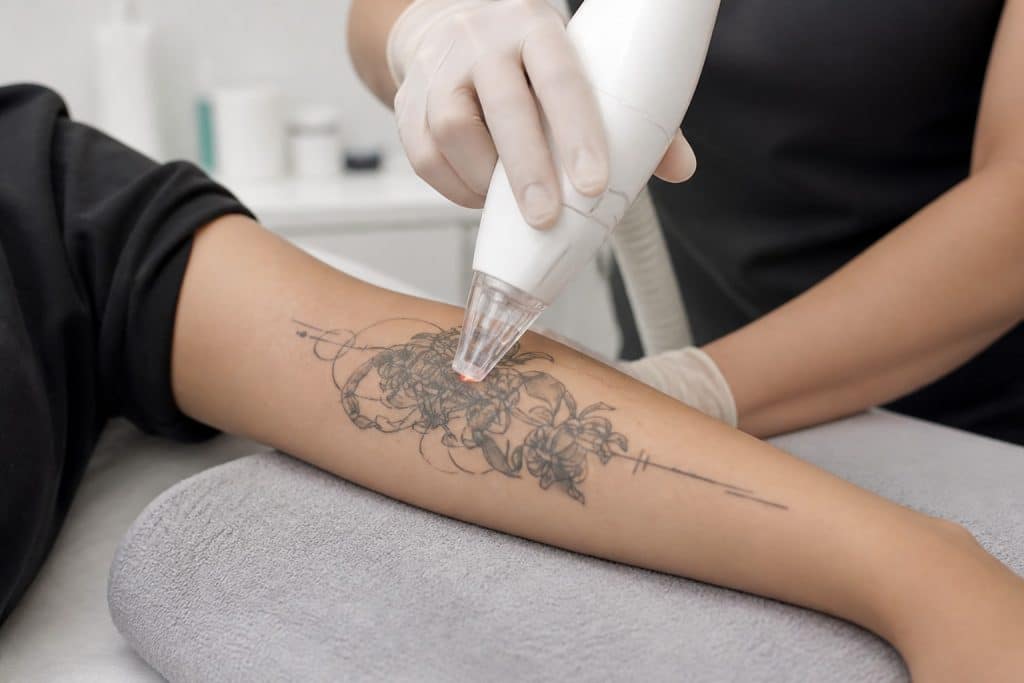
A CO2 laser procedure uses a beam of light to remove thin layers of damaged skin and trigger new collagen, which improves texture, fine lines, scars and sun damage. Expect a consultation and preparation phase, a treatment that takes under an hour for most areas, and a healing period that varies with the treatment's intensity. Knowing each stage in advance makes the experience predictable and the results better.
This guide walks through what happens before, during and after treatment, written for Toronto residents who want a clear plan before committing.
What Is a CO2 Laser Procedure and How Does It Work?
A CO2 laser procedure delivers focused light energy that vaporizes tiny columns or layers of skin, and the body responds by building fresh collagen and replacing the treated tissue with smoother skin.
There are two main approaches:
- Fractional CO2: The laser treats a grid of microscopic zones and leaves the skin between them intact. Healing is faster, and it suits most people.
- Ablative (full) resurfacing: The laser removes the entire surface layer. It produces stronger results and requires longer downtime.
Fractional treatment is the more common choice for acne scarring, fine lines, uneven texture and sun damage. Clinicians adjust depth and density depending on your goals, which is why the same machine can produce a mild treatment or an intensive one.
New Skin Laser Clinic offers eCO2 laser resurfacing in the Beaches, with the treatment level set during your consultation rather than assigned by default.
Is a CO2 Laser Right for Your Skin Concerns?
A CO2 laser is a good fit when your concern involves texture, scarring or visible aging rather than surface color alone.
It is commonly used for:
- Acne scars and surgical scars
- Fine lines and wrinkles, especially around the eyes and mouth
- Sun damage and rough skin texture
- Enlarged pores
- Some benign growths, including seborrheic keratosis, which a clinician can assess and treat
Other options may suit you better if your main concern is pigment, redness or hair. A Nd:YAG platform, for example, targets different problems, and you can read about Nd:YAG laser skin treatment if vascular concerns are your focus. For lines and wrinkles specifically, laser treatment for wrinkles explains how options compare.
CO2 resurfacing is not ideal for everyone. Active infection, recent isotretinoin use, a tendency toward keloid scarring, or a very recent tan are all reasons a practitioner may delay or decline treatment. Deeper skin tones carry a higher risk of pigment changes, so settings and candidacy need careful review.
What Happens at the Consultation?
The consultation confirms whether treatment suits you, defines realistic goals and produces a written plan with a fixed price.
A thorough consultation covers your medical history, medications, scarring history, sun exposure and skin tone. The practitioner examines the area, explains the settings they would use, and describes the downtime that matches that intensity.
At New Skin Laser Clinic, the consultation is free, with no pressure or obligation. Treatment plans and exact pricing are confirmed before anything is done, so there are no surprises on treatment day.
Bring these questions:
- Which CO2 setting do you recommend for my concern, and why?
- How many sessions will I likely need?
- What does the exact total cost include?
- How many days should I plan to stay home?
- What aftercare products do I need before I start?
How Should You Prepare for a CO2 Laser Procedure?
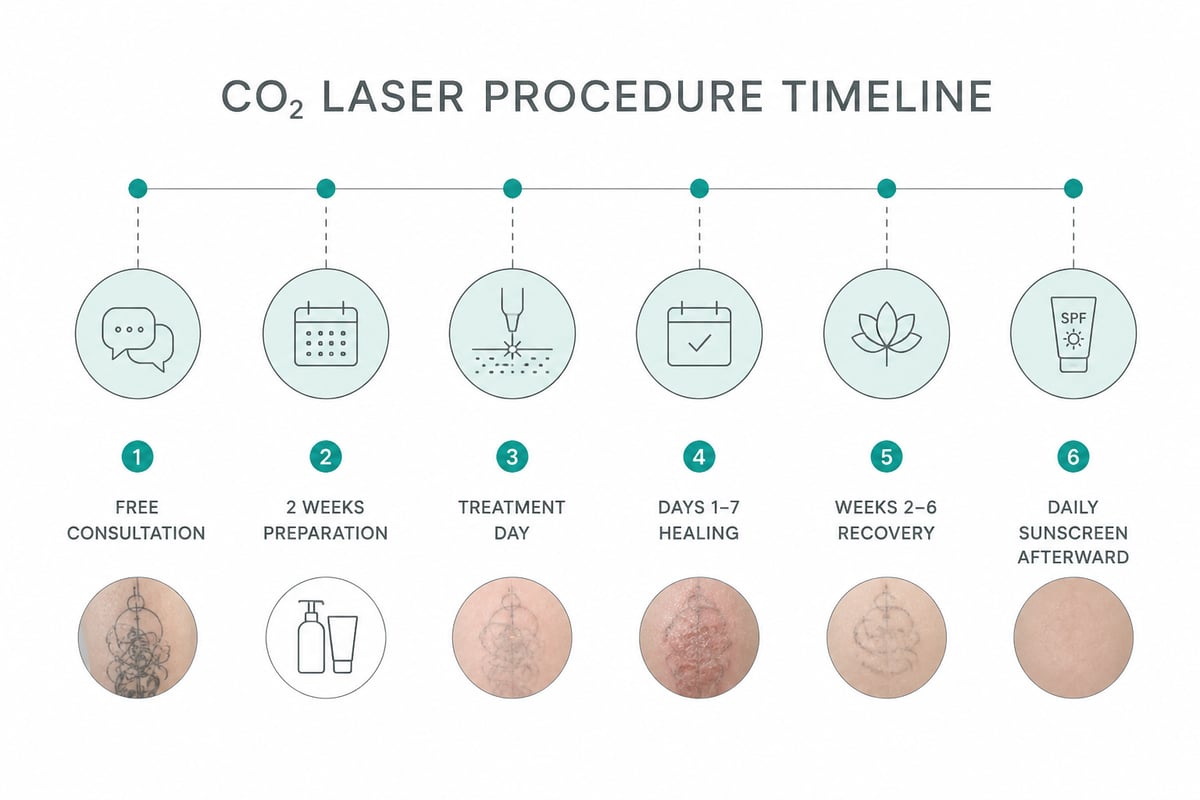
Preparation starts about two weeks before treatment and centers on sun avoidance, a simplified skincare routine and a few practical arrangements.
Your clinic will give specific instructions, and these are typical:
- Avoid sun and tanning. Treating tanned skin raises the risk of pigment problems. Use broad-spectrum sunscreen daily.
- Pause active ingredients. Retinoids, glycolic acid and similar exfoliants are usually stopped several days to a week beforehand.
- Tell your clinician about cold sores. If you are prone to them, you may be prescribed an antiviral to start before treatment, because laser energy can trigger an outbreak.
- Avoid blood-thinning supplements unless your doctor advises otherwise.
- Arrive with clean skin. No makeup, moisturizer or sunscreen on the treatment area.
Plan your schedule as well. If you work downtown, consider booking on a Thursday or Friday so the first days of visible healing fall on a weekend. Stock up on saline or white vinegar, a gentle cleanser, a recommended ointment and a clean pillowcase before the day arrives.
What Happens During the CO2 Laser Procedure?
On treatment day, the area is cleansed, numbed, treated with the laser and then dressed or covered with ointment, typically within 30 to 60 minutes.
The sequence is straightforward:
- Cleansing. The skin is cleaned to remove oils and residue.
- Numbing. A topical anesthetic sits on the skin for 30 to 60 minutes. Larger or deeper treatments may use additional anesthesia, which your clinician will discuss.
- Laser treatment. You wear protective eyewear while the laser passes over the area. Most people describe a hot, prickling sensation that is manageable with numbing.
- Cooling and dressing. Cool air or compresses calm the skin. Depending on intensity, ointment or a non-stick dressing is applied.
Expect the skin to look red and feel hot immediately afterward, similar to a bad sunburn. You can usually go home right away, though you should arrange a ride if you received stronger sedation.
How Long Does It Take to Recover From a CO2 Laser?
Healing after CO2 resurfacing generally takes 10 to 21 days, depending on the condition treated and the laser intensity, according to the Cleveland Clinic.
Fractional treatments tend to sit at the shorter end, while more aggressive resurfacing sits at the longer end. Redness can linger for weeks to months, even after the surface has healed.
Here is a typical timeline for a moderate fractional treatment:
| Timeframe | What you may see and feel |
|---|---|
| Day 0 to 1 | Burning, heat, swelling and redness |
| Days 2 to 4 | Oozing or weeping, tightness, peak swelling |
| Days 5 to 7 | Skin darkens and begins to flake or peel |
| Days 7 to 14 | Peeling finishes, pink new skin emerges |
| Weeks 2 to 6 | Redness fades gradually, makeup is usually possible |
| Months 1 to 6 | Collagen builds, texture and tone continue to improve |
NHG Health notes that burning after treatment may last from 60 minutes to 6 hours on the first day, and that facial skin may darken and begin flaking around days five to seven. This darkening is normal. Do not pick at flaking skin, because picking can cause scarring and pigment changes.
What Does CO2 Laser Aftercare Involve?
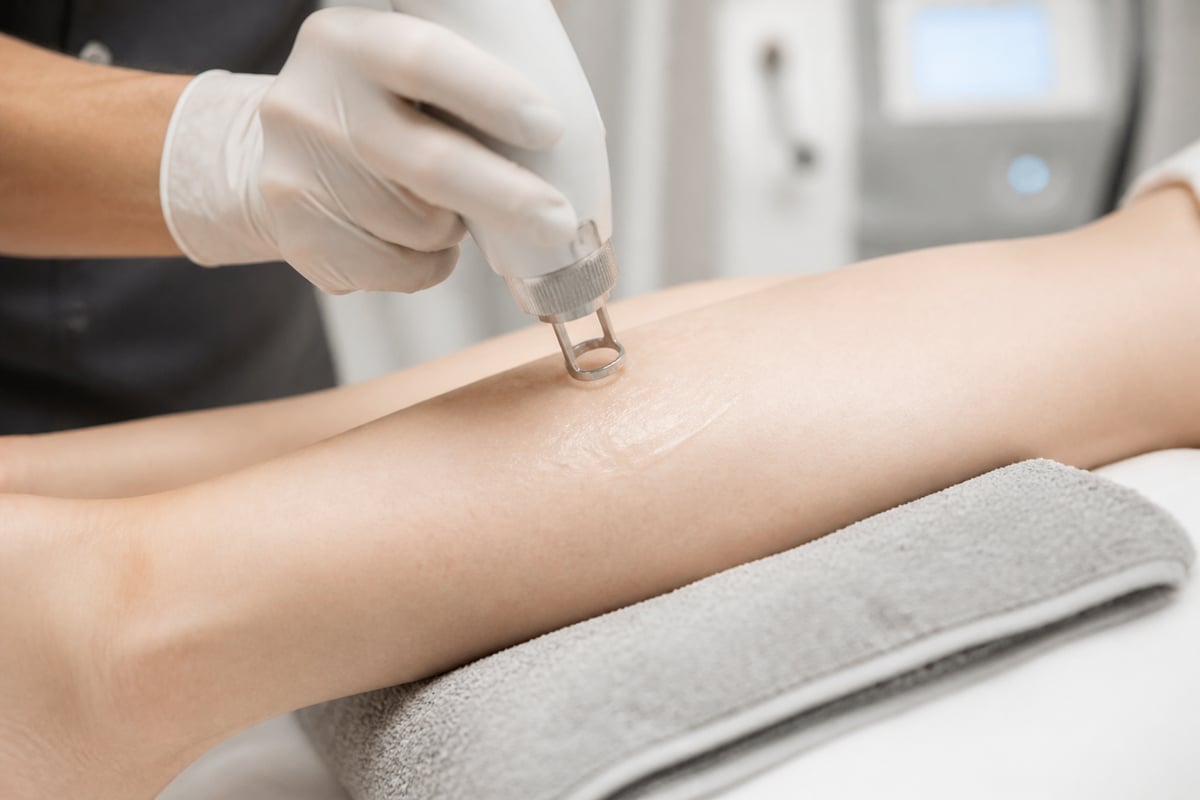
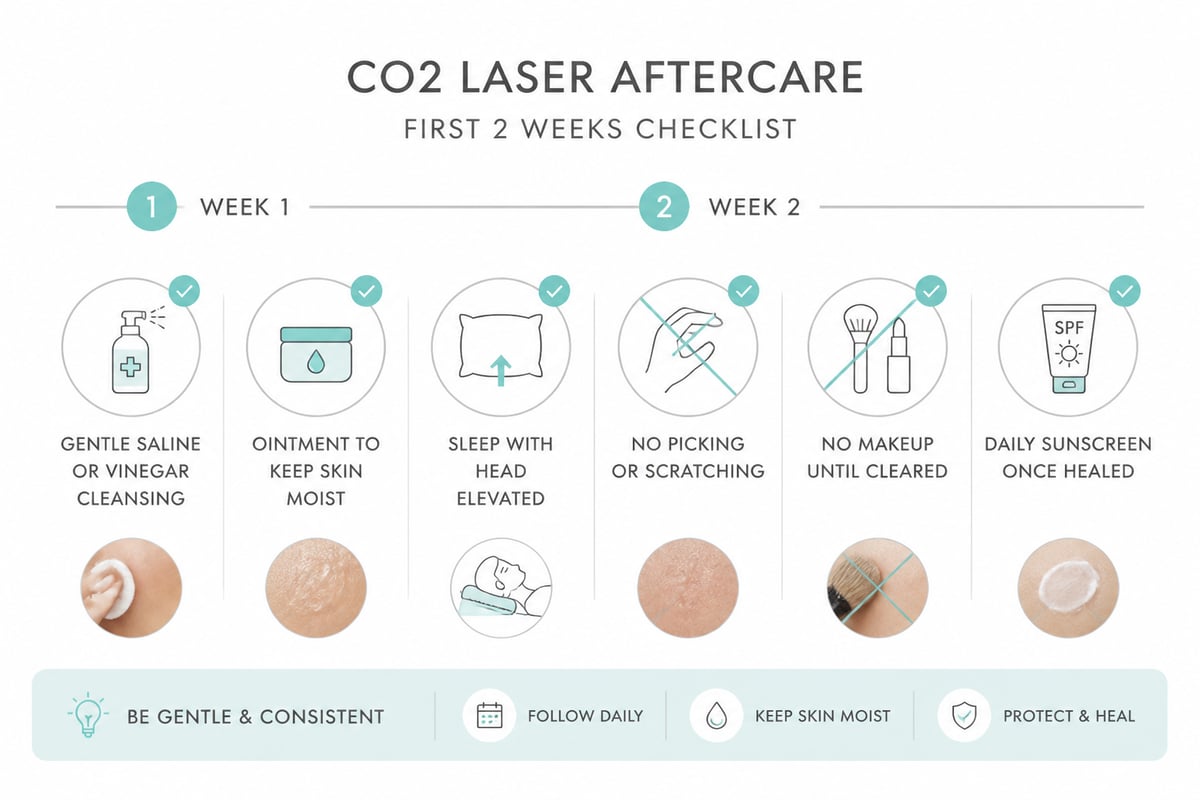
Aftercare means keeping the skin clean, moist and protected from the sun while it rebuilds, following the exact instructions your clinician provides.
The Cleveland Clinic explains that a non-stick dressing is typically applied for the first 24 hours, after which treated areas may need cleaning two to five times daily with saline or diluted vinegar, as directed by the clinician.
A practical daily routine looks like this:
- Cleanse gently with the solution your clinician specifies, using clean hands or sterile gauze.
- Apply the recommended ointment to keep the area moist. Dry, scabbed skin heals more slowly.
- Sleep with your head elevated for the first few nights to reduce swelling.
- Skip makeup until your clinician confirms the surface has healed.
- Avoid heat and sweat. Hot showers, saunas and hard workouts can irritate healing skin.
- Keep your hands off. No scratching, picking or rubbing.
Call your clinic promptly if you notice increasing pain, yellow crusting, spreading redness or fever. These can signal infection, which ophthalmology literature on facial resurfacing lists among the known complications alongside pigment changes, persistent redness and scarring. Early reporting keeps problems small.
How Do You Protect Your Results From the Sun?
Strict sun protection is the single habit that most affects whether the final result is smooth and even or marked by pigment changes.
After healing, the Cleveland Clinic recommends daily broad-spectrum sunscreen with SPF 30 or higher. It adds that retinoids or glycolic acid products may be resumed at about six weeks, or as directed by the clinician.
NHG Health advises avoiding sun exposure for at least three months and applying SPF 30 or higher daily after the first week. It reports post-laser hyperpigmentation in 5 to 10 percent of cases, which may take several months to clear.
For Beaches residents, this has a seasonal consequence. A boardwalk walk, a patio lunch on Queen Street or an afternoon at Woodbine Beach all mean strong reflected light off water and sand. Many people choose to schedule resurfacing in the fall or winter, when sun exposure is naturally lower, and then wear a wide-brimmed hat and mineral sunscreen through the spring.
What Are the Before and After Results of Fractional CO2 Laser Treatment?
Results from fractional CO2 treatment typically appear gradually: smoother texture and tighter skin emerge over weeks, and collagen remodeling continues for months.
Once the redness settles, many people notice softer fine lines, less visible acne scarring and a more even surface. Scars and deeper wrinkles respond progressively, and significant scarring often needs more than one session for best improvement.
Be wary of any clinic that promises a guaranteed outcome or shows unverified photos. Results depend on your skin type, the condition treated, the settings used and how closely you follow aftercare. A fair consultation gives you a realistic range of improvement rather than a promise.
How Successful Is a CO2 Laser?
A CO2 laser is a well-established tool for skin resurfacing, and it is considered effective for scars, wrinkles and texture when treatment is matched to the right candidate and followed with strict aftercare.
Success is not uniform. Deep scars may improve rather than disappear. Wrinkles caused by muscle movement may need a complementary approach. Pigment-prone skin tones require conservative settings and careful candidate selection.
Many people combine resurfacing with supporting treatments. A signature laser facial can maintain clarity between sessions, while microneedling offers a gentler option for those who want collagen stimulation with less downtime. A free consultation helps you decide whether CO2, a lighter option or a combined plan makes sense for your goals and calendar.
What Does a CO2 Laser Procedure Cost in Toronto?
The cost depends on the area, the intensity and the number of sessions, so an exact figure only comes after an in-person assessment.
Face, neck, scars and smaller spot treatments are priced differently, and a package across multiple sessions may differ from a single visit. At New Skin Laser Clinic, treatment plans and exact pricing are confirmed before anything is done, in writing and without obligation.
When comparing quotes anywhere in the city, ask what is included: numbing, follow-up visits, aftercare products and any touch-up sessions. A lower headline price can leave out items that add up later.
Frequently Asked Questions
Is CO2 laser treatment effective for seborrheic keratosis?
CO2 lasers can remove seborrheic keratosis, which are benign raised growths, by vaporizing the lesion layer by layer. A clinician should first confirm the diagnosis, since any lesion that looks unusual needs medical evaluation rather than cosmetic treatment.
Does a CO2 laser procedure hurt?
Most people feel heat and a prickling snap sensation, which a topical anesthetic makes manageable. The burning that follows is usually strongest in the first few hours and fades over the first day.
How many CO2 laser sessions will I need?
Mild concerns such as texture and fine lines may improve noticeably after one session, while acne scars often benefit from a series spaced weeks to months apart. Your practitioner will estimate the number during your consultation and confirm it in your treatment plan.
Your next step is to book a consultation and bring photos of your concern, your medication list and your calendar so the plan fits your life. New Skin Laser Clinic, at 1834 Queen St East in the Beaches, pairs advanced laser technology with a team of expert estheticians who tailor each treatment to your skin. You can book your free consultation by calling (416) 317-6696, and you will leave with a clear plan and exact pricing before anything is done.